Vietnam - Looking for the Footprints of War
Updated: Jun 6
Footprints of the American War; searching for an experience that never was.
It was July 1968 and the Vietnam War was raging. A lot had happened in the past couple of months for me – graduated from university, started work at the railroad and, most importantly, I lost my student draft deferment. Suddenly, I was now an inductee on my way to Ft. Campbell Kentucky. Cold sweats as I boarded the bus in Indianapolis for the nocturnal trip. Some trepidation, surely, and the depressing, sinking feeling in the pit of my stomach that “this will be a tough one to get through”.
A deep knot churned in the pit of my stomach on that midnight bus ride. The June night sky showed only blackness out the bus window as the Greyhound roared southward from Indianapolis arriving too quickly at my destination in western Kentucky. The conflict in Vietnam was raging as were protests and riots at home; draft boards were under pressure to deliver maximum numbers of inductees into the hands of merciless drill sergeants at military bases throughout the country – and soon to be shipped off to Southeast Asia. This was the dreaded moment - I had become one of those inductees and was on my way to Ft. Campbell about to be embraced by the US Army. Being an avid railway aficionado, I had a dream future planned in the railroad industry but that career was abruptly interrupted and now I was “in the army” during a wartime environment that surely would soon see me on a military transport plane to Southeast Asia.
Ft. Campbell arrival was around 1 am; we were herded into the barracks building and were immediately ordered to sweep and clean the premises as our first task, before going to bed. Rude awakening the next morning at 6 am as the bare light bulbs on the ceiling suddenly took us out of deadly sleep…and my army life began. But to my surprise, it was to end less than 30 days later.
In May of that year, I had graduated from the University of Kentucky. I had just started a position as a management trainee in the operating department with the Penn Central Railroad; but soon the Army got in the way. Losing my student deferment, the Selective Service lost no time in reclassifying me 1-A in June and by early July, I was on a late - night bus from Indianapolis to Ft Campbell Kentucky – by then I was resigned to a two-year career in the military – and likely a free trip to South - East Asia. Many of my friends had already made the journey; and I was resigned to my fate that I was about to join them.
But, as fate would have it, it was not to be. Upon further medical examination at Ft Campbell, my many basketball mishaps had resulted in a badly torn ligament in my left ankle. I was informed that the US Army would have none of that and I was placed in an exit position out of the army. Sent home, reclassified as “1-Y” (“void induction”) and got on with my life. This classification meant that the registrant qualified for service only in time of war or national emergency. Note: The 1-Y classification was abolished December 10, 1971. Local boards were subsequently instructed to reclassify all 1-Y registrants by administrative action.[1] After 1968, I never again heard from my draft board.
But many others did not get on with their lives – leaving me with a sense of guilt that I avoided the fate that faced so many young Americans – that of being shipped out to the active war zone in Vietnam. Strangely, I felt I had missed out on the experience of “going to war”. Not that it was an experience I had actively craved, but for many years, I was left with a curiosity of “what would it have been like?”
While many friends did not return after their Vietnam tour, of those that did, most were not very conversant about their experience. My life-long buddy Lee was over there but never discussed his experiences at length with me; though I suppose he did with fellow vets. I, somewhat idly, wondered what I missed, and for many years nursed a not-so-serious inclination to visit the country and regions where that infamous war was waged.
However, in the spring of 2026, there arose an opportunity that had me intrigued at first, then seriously hooked. The travel group to which I belong, Travelers Century Club, was to hold their biennial convention in Hanoi in May 2026 – the perfect opportunity to combine my interest in the travel group, pursue my interest in the railways in the region (especially Vietnam’s “Reunification Express) and to salve my conscience about the Vietnam War.
I did some online research and quizzed Lee about where he spent time and identified places of importance during his deployment in the country and based my travel plans accordingly. Many years ago, when I was working in Bangkok, I made a weekend trip to Saigon (Ho Chi Minh City) and took in the Cu Chi tunnels and the War Remnants Museum. This trip, I would be in Hanoi; I could visit the Vietnam Military History Museum and the infamous Hanoi Hilton. But in the vicinity of Hue, the DMZ was only a few kilometers to the north and in the surrounding area, many of the war zone sites where Lee spent time. I also planned to visit Da Nang and Nha Trang, close to Cam Rahn Bay, site of a major port during the American War. I would make a short visit to Saigon, but only to stay one night at the iconic Continental Hotel, a symbol of Indochina’s colonial past and the place where many war correspondents gathered during the days of the Vietnam War.
Lee spent most of his Vietnam time in Thua Thien Province, where the ancient city of Hue is located. Hue would be my “base” for discovering several memorable wartime venues. I arranged two tours, one on each day, to the Vietnam War sites:
1. Upon arrival in Hue, I arranged a private tour to several of the base camps and fire support bases of the Vietnam War; Thang Lee would be my guide – he is well versed in the location of base camps and fire support bases of the American War and has been conducting these tours since 2015; Lee spent time at each of these locations and they would be my focal point during my day’s excursion out of Hue:
· Camp Eagle
· Birmingham
· Bastogne
· LZ Sally

2. The following day I arranged a small group tour with the following itinerary (as described in their brochure):
Quang Tri Citadel
07h30: Our guide and car will pick you up at your hotel in Hue central, then ready to start the DMZ Tour Hue. Visiting places: include the Horror Highway: the horrible carnage on Vietnam Highway 1.Thousands of civilians, mostly the elders, women, children, and scores of soldiers were killed by artillery and infantry weapons in hours of shooting; Long Hung Church: one of the very few existing buildings remains in Quang Tri town during “Fire Summer” or Eastern Offensive in 1972. It is a National Relic in the town of Quang Tri Vietnam; Quang Tri Ancient Citadel: is seen as an eye-witness of fierce battles during the anti-American esistance war in 1972. During the 81-day fighting, the citadel was almost destroyed by thousands of tons of bombs released by the US army. Nowadays, the citadel becomes a place to mark immortal victories of the Vietnamese army and people and to educate youths about the nation’s revolutionary tradition and its patriotism.
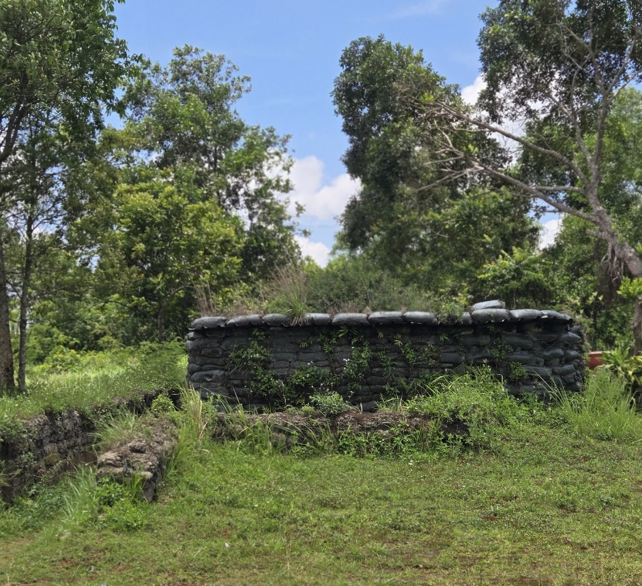
Khe Sanh Combat Base
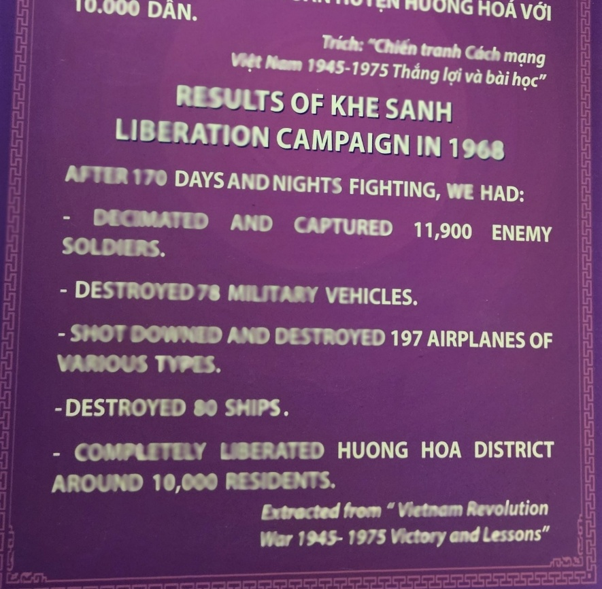
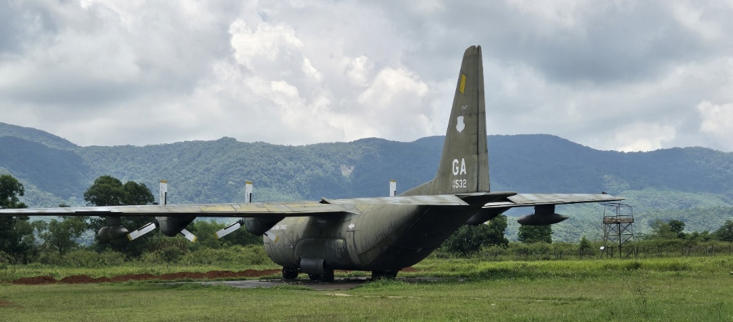
Continue the journey, we stop to visit: - Dakrong Bridge: the bridge was considered the beginning of the Ho Chi Minh Trail network, and during many years of Vietnam War, this access point was hotly contested. The Dakrong Bridge fell many times. Now it’s a grand suspension bridge, a proud thumbed nose as if to say, “You can’t knock down my bridge anymore.” On the way, tourists also have chances to meet Paco minority village; Ta Con Airport: now is the Khe Sanh Combat Base Museum, contains a boneyard of several captured U.S. tanks and aircraft destroyed during the Battle of Khe Sanh. According to the official accounts provided by the museum, 197 U.S. planes were shot down or captured during the 170-day battle. - Free snacks. Enjoy the local Khe Sanh coffee (own expense).
Vinh Moc Tunnel
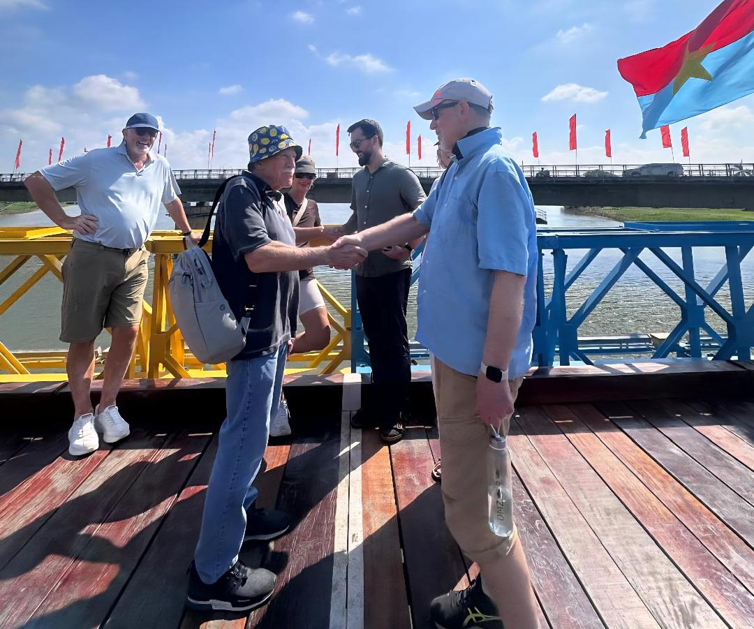
After break, our guide and car take you back to the war sites, including: Hien Luong Bridge; Ben Hai River:The Geneva Agreements on Vietnam signed in 1954 divided Vietnam into North and South with the 17th Parallel where the Ben Hai River runs through the central province of Quang Tri as a borderline. Hien Luong Bridge, also known as the Peace Bridge, was built by theFrench in 1950, across Ben Hai River. It is 178 m long but it took 21 years for Vietnamese people from the North and the South to be united. Vinh Moc Tunnels and Tunnels Museum: The most highlight part of DMZ Tour during Vietnam War. The complex of Vinh Moc tunnel located deep in the Vietnamese Demilitarized Zone and sheltered Vinh Linh county people from the intense bombing. The tunnels were a success in saving the villagers’ lives and providing them the necessary living conditions to fight back the American enemy.
It was clear, based on the description of the battlefield tours, it will not be an “objective” view of the war, but rather from the perspective of the Vietnamese victors. But still, it is an event in my past, in which I did not participate, but felt the need to experience at least the venues where they took place. What would it be like, standing in those iconic battle zones, where some 55 years ago, men like me, fought and died in a years’ long struggle that nearly tore our country apart? Would these places reek of death and despair that was so vivid many years ago, or would they simply be transformed into something rather less vivid – a gas station, park or simply an overgrown field with nothing but memories remaining? How would I feel just being there? I had to find out.
Hue Arrival
Not breaking any speed records, traveling at a maximum speed of 78 km/hr, my 14 – hour overnight train from Hanoi arrived at Hue station dead on time (Amtrak, please note) and as arranged, my guide Thang Lee and driver Huy met me at the station, and after dropping my bags at the hotel, we began our hunt for the remnants of the Vietnam War or as it is known in Vietnam, the American War.
Camp Eagle
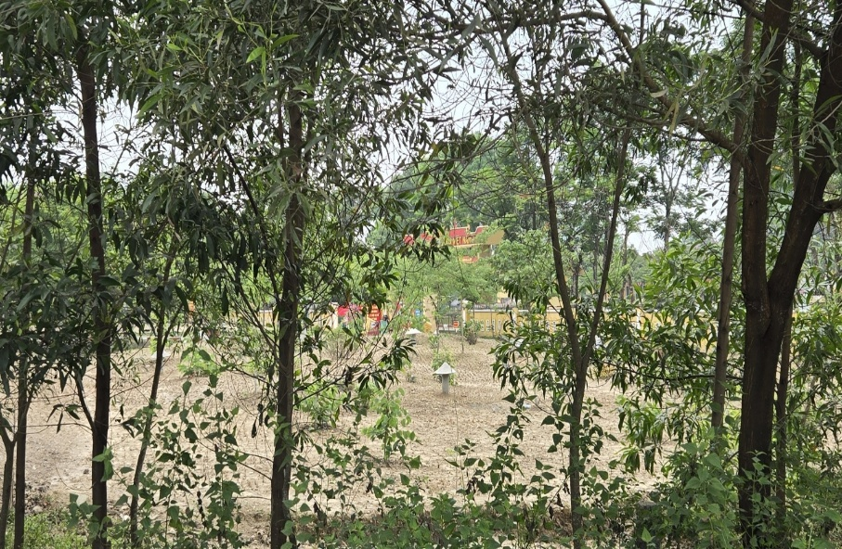
Of the four sites I was to visit on this day, only at Camp Eagle, where 101st Airborne was based during 1969 - 1972 located along route 546 on the road to Phu Bai, about 7 kilometers to the south-east of Hue, is there a continued military usage. The facility now belongs to the Peoples’ Army of Vietnam, contrary to information found on Wikipedia[2], “the base is abandoned and turned over to farmland, light

industry and housing”. While I declined to take the risk of an obvious photo of the facility, I did manage to get a somewhat obstructed view thought the surrounding trees. Among the hilly terrain behind the existing military base are many gravestones, erected by local villagers after 1975. Land is scarce in Vietnam for the burying of the dead (actually, they are above ground level) so any available space is utilized. During my train travels in the country, I noticed even in the middle of rice paddies, there are the occasional burial mounds. The practice of burying ancestors on family land — including in rice paddies — is rooted in ancestral veneration and feng shui. Graves are traditionally placed close to the family home to keep the spirits of the dead nearby, where they are believed to protect and help the living[3].


Birmingham
Birmingham was a fire support base, also functioned as a forward operating base located about 10 kilometers west of Cape Eagle. Portions of the runway can be seen along a row of residences with the end of one runway in a group of trees. The land was essentially level throughout.


A shrine to the residents killed during the war is erected at the Birmingham site; also, a cemetery where, only symbolically, those killed are entombed.


Bastogne
So named after Battle of Bastogne in WWII where the 101st Airborne Division famously held the town against a much larger German force. Moving around Bastogne was physically the most challenging of my trip. At this former forward operating base, there was a helicopter landing zone high on a hill, and on another hill, separated from the landing zone by about one kilometer, a camp site. I struggled to finish the climb up to these sites, and thorns sliced my ankles and legs as I tramped through the brush hiding the secrets of over half a century.


Landing Zone Sally
LZ Sally is located 12 kilometers northwest of Hue along the railway line that links Hanoi with Saigon. Only a small section of the runway remains, as a cement plant occupies most of the land area. LZ Sally was a fire support base, specifically in the I Corps Tactical Zone in South Vietnam. It was occupied by elements of the 1st Battalion, 321st Field Artillery Regiment (1-321 FAR) of the 101st Airborne Division in early 1968. LZ Sally is remembered in veteran histories and reunion sites as part of the 101st Airborne’s combat footprint in Vietnam.[4]


Khe Sanh
The village of Khe Sanh was the seat of government of Hương Hoa district, an area of Bru Montagnard villages and coffee plantations about 7 miles (11 km) from the Laotian frontier on Route 9, the northernmost transverse road in South Vietnam. The outcome of battles between the US and South Vietnamese forces and the Vietcong at Khe Sanh have been characterized as victories, from both sides.
The main US forces defending Khe Sanh combat base were two regiments of Marines supported by elements from the Army, Air Force and the Royal Australian Air Force as well as a small number of South Vietnamese troops. These were pitted against two to three divisions of the Viet Cong (North Vietnamese People’s Army of Vietnam).
The US command in Saigon initially believed that combat operations around Khe Sanh during 1967 were part of a series of minor Vietcong offensives in the border regions, but when the enemy was found to be moving major forces into the area, the U.S. force at Khe Sanh was reinforced. On 21 January 1968, the Vietcong surrounded and besieged the Marine base. In the ensuing five months, Khe Sanh and the hilltop outposts around it were subjected to daily Vietcong attacks, and several infantry assaults. 274 U.S. troops were killed and more than 2,500 wounded.
To support the Marine base, the US Air Force undertook a massive aerial bombardment campaign. In the first three months, over 114,810 tons of bombs were dropped by US and allied aircraft and over 158,900 artillery rounds were fired in defense of the base. US forces lost one KC-130, three C-123 and 35 helicopters, while another 23 aircraft and 123 helicopters were damaged. In March 1968, a combined Marine–Army/ARVN task force launched an overland relief expedition (Operation Pegasus) that eventually broke through to the Marines at Khe Sanh.
American commanders considered the defense of Khe Sanh a success, but shortly after the siege was lifted, decided to abandon the base rather than risk similar battles in the future. On 19 June 1968, the evacuation and destruction of Khe Sanh began. Amid heavy shelling, the Marines attempted to salvage what they could before destroying what remained as they were evacuated. Minor attacks continued before the base was officially closed on 5 July. Marines remained around Hill 689, though, and fighting in the vicinity continued until 11 July until they were finally withdrawn, bringing the battle to a close.
In the aftermath, the North Vietnamese proclaimed a victory at Khe Sanh, while US forces claimed that they had withdrawn, as the base was no longer required. Historians have observed that the Battle of Khe Sanh may have distracted American and South Vietnamese attention from the buildup of Viet Cong forces in the south before the early 1968 Tet Offensive. Nevertheless, the US commander during the battle, General William Westmorland maintained that the true intention of Tet was to distract forces from Khe Sanh.[5]
As the Vietnamese consider it a victory for the Viet Cong forces, forcing the “American Imperialists” to withdraw, this site it actively promoted by the Vietnamese government to tourists.




Vinh Moc Tunnels and the DMZ
The Vinh Moc tunnels were built to shelter people from the intense bombing of Son Trung and Son Ha communes in Vinh Linh county of Quang Tri Province in the Vietnamese Demilitarized Zone (DMZ).
The American forces believed the villagers of Vinh Moc were supplying food and armaments to the North Vietnamese garrison on the island of Con Co which was in turn hindering the American bombers on their way to bomb Hanoi. The idea was to force the villagers of Vinh Moc to leave the area. The villagers initially dug the tunnels to move their village 10 meters and subsequently 30 meters underground. The tunnels were constructed in several stages beginning in 1966 and used until early 1972. The complex grew to include wells, kitchens, rooms for each family and spaces for healthcare. Around sixty families lived in the tunnels; as many as 17 children were born inside the tunnels.
The tunnel existence turned out to be a success as no villagers lost their lives. The only direct hit was from a bomb that failed to explode; the resulting hole was utilized as a ventilation shaft. The Vietnamese government now promotes tourists to the location of these tunnels and the bridges the span the Ben Hai River that demarcates the DMZ.
During my visit, I crawled/walked through about 1 km of this clammy dampness that pervades this vast network of tunnels, through the network at descending levels and felt each one of the 30 meters of depth as I traversed each of the three tunnel layers. Emerging next to the Pacific Ocean, I assumed the way back to the top would be easier – but it turned out to be a tough climb up the 30 meters of elevation, with a long series of steps some wooden, some hewn from the rocks.

So, what was the result?
What was it like, standing in those iconic battle zones, where some 55 years ago, (could have been me), brave and frightened young men fought and died in a years’ long struggle that nearly tore our country apart? Did these places reek of death and despair that was so vivid many years ago? They might simply have been transformed into something rather less aggressive – a gas station, park or simply an overgrown field blending in with the rural Vietnam landscape, with nothing but memories remaining
The four base camps and fire support bases I visited were virtually unmarked to the casual visitor. There was no sign saying: “this is the former site of ”LZ Sally” ”…Camp Eagle”. Only dense vegetation, and in some cases, some economic development had taken over on these once hallowed grounds. At Camp Eagle, the Vietnamese military has constructed a base, and some villagers established graves on this available land; a few houses line the former runway at Birmingham; virtually nothing has developed at the landing zone or camp sites at Bastogne; and at LZ Sally, a cement plant occupies much of the territory. To the uninitiated, these sites are simply typical scenes of rural Vietnam.
But I knew what these sites meant 55 years ago - what did I feel? Did I experience the cold sweat of fear of young men about to go into combat? I certainly dripped of perspiration from every pore as I clambered up the steep slopes at the back of Camp Eagle, out of sight of the Vietnam military base; breath came is desperate gasps as I walked up the steep slopes leading to the landing zone and camps at Bastogne; I felt the thorns and brambles slashing my ankles as I tramped through the bushes at Camp Eagle and Bastogne. And the vision of the Vietnamese landscape at all these locations has been implanted in my memory forever.
So, did I come close to feeling what Lee and thousands others felt during those trying days over 50 years ago – the fear of the relentless and much of the time unknown enemy, an unfamiliar and hostile environment full of venomous snakes, spiders and malaria, the trepidation of adrenalin rush in the battles? Unequivocally the answer is “no”, but I was there, I tramped up and down the steep slopes of Bastogne, perspiration rolling out of every pore, examined the remains of ancient runways and camp grounds, but I could only imagine the sensations felt by those brave soldiers of so long ago…that could have included me in their ranks…..my visit was but a poor imitation of my actually being there in 1968 – who would have known the outcome?
But at least I can say I have been there, climbed the same hills and footpaths, now those landscapes are familiar to me…. but I could only imagine the sensations of their terrifying reality some 55 years ago. But I had to try.


Comments